1994 Edition
CIA World Factbook 1994 (Project Gutenberg)
Introduction
A subscription to this publication may be purchased from
Document Expediting (DOCEX) Project Exchange and Gift Division Library of Congress Washington, DC 20540
Abbreviations
(see Appendix B for abbreviations for international organizations and groups and Appendix D for abbreviations for international environmental agreements) avdp. -- avoirdupois c.i.f. -- cost, insurance, and freight CY -- calendar year DWT -- deadweight ton est. -- estimate Ex-Im -- Export-Import Bank of the United States f.o.b. -- free on board FRG -- Federal Republic of Germany (West Germany); used for information dated before 3 October 1990 or CY91 FSU -- former Soviet Union FY -- fiscal year FYROM -- The Former Yugoslav Republic of Macedonia GDP -- gross domestic product GDR -- German Democratic Republic (East Germany); used for information dated before 3 October 1990 or CY91 GNP -- gross national product GRT -- gross register ton GWP -- gross world product km -- kilometer kW -- kilowatt kWh -- kilowatt hour m -- meter NA -- not available NEGL -- negligible nm -- nautical mile NZ -- New Zealand ODA -- official development assistance OOF -- other official flows PDRY -- People's Democratic Republic of Yemen [Yemen (Aden) or South Yemen]; used for information dated before 22 May 1990 or CY91 sq km -- square kilometer sq mi -- square mile UAE -- United Arab Emirates UK -- United Kingdom US -- United States USSR -- Union of Soviet Socialist Republics (Soviet Union); used for information dated before 25 December 1991 YAR -- Yemen Arab Republic [Yemen (Sanaa) or North Yemen]; used for information dated before 22 May 1990 or CY91
Administrative divisions
- The numbers, designatory terms, and first-order administrative divisions are generally those approved by the US Board on Geographic Names (BGN). Changes that have been reported but not yet acted on by BGN are noted.
- 30 provinces (velayat, singular - velayat); Badakhshan, Badghis, Baghlan, Balkh, Bamian, Farah, Faryab, Ghazni, Ghowr, Helmand, Herat, Jowzjan, Kabol, Kandahar, Kapisa, Konar, Kondoz, Laghman, Lowgar, Nangarhar, Nimruz, Oruzgan, Paktia, Paktika, Parvan, Samangan, Sar-e Pol, Takhar, Vardak, Zabol note: there may be a new province of Nurestan (Nuristan)
Agriculture
largely subsistence farming and nomadic animal husbandry; cash products - wheat, fruits, nuts, karakul pelts, wool, mutton
Airports
total: 42 usable: 35 with permanent-surface runways: 9 with runways over 3,659 m: with runways 2,440-3,659 m: 10 with runways 1,220-2,439 m: 17
Area
- Total area is the sum of all land and water areas delimited by international boundaries and/or coastlines. Land area is the aggregate of all surfaces delimited by international boundaries and/or coastlines, excluding inland water bodies (lakes, reservoirs, rivers). Comparative areas are based on total area equivalents. Most entities are compared with the entire US or one of the 50 states. The smaller entities are compared with Washington, DC (178 sq km, 69 sq mi) or The Mall in Washington, DC (0.59 sq km, 0.23 sq mi, 146 acres).
- total area: 647,500 sq km land area: 647,500 sq km comparative area: slightly smaller than Texas
Birth rate
- The average annual number of births during a year per 1,000 population at midyear; also known as crude birth rate.
- 43.46 births/1,000 population (1994 est.)
Branches
the military still does not yet exist on a national scale; some elements of the former Army, Air and Air Defense Forces, National Guard, Border Guard Forces, National Police Force (Sarandoi), and tribal militias remain intact but are factionalized among the various mujahedin and former regime leaders
Budget
revenues: $NA expenditures: $NA, including capital expenditures of $NA
Capital
Kabul
Climate
arid to semiarid; cold winters and hot summers
Coastline
0 km (landlocked)
Comments and queries are welcome and may be addressed to
Central Intelligence Agency Attn.: Office of Public and Agency Information Washington, DC 20505
Constitution
none
Currency
1 afghani (AF) = 100 puls
Dates of information
In general, information available as of 1 January 1994 was used in the preparation of this edition. Population figures are estimates for 1 July 1994, with population growth rates estimated for calendar year 1994. Major political events have been updated through May 1994.
Death rate
- The average annual number of deaths during a year per l,000 population at midyear; also known as crude death rate.
- 18.94 deaths/1,000 population (1994 est.)
Defense expenditures
the new government has not yet adopted a defense budget
Digraph
AF
Digraphs
The digraph is a two-letter "country code" that precisely identifies every entity without overlap, duplication, or omission. AF, for example, is the digraph for Afghanistan. It is a standardized geopolitical data element promulgated in the Federal Information Processing Standards Publication (FIPS) 10-3 by the National Institute of Standards and Technology (US Department of Commerce) and maintained by the Office of the Geographer (US Department of State). The digraph is used to eliminate confusion and incompatibility in the collection, processing, and dissemination of area-specific data and is particularly useful for interchanging data between databases.
Diplomatic representation
The US Government has diplomatic relations with 183 nations, including 177 of the 184 UN members (excluded UN members are Bhutan, Cuba, Iran, Iraq, North Korea, Vietnam, and former Yugoslavia). In addition, the US has diplomatic relations with 6 nations that are not in the UN - Holy See, Kiribati, Nauru, Switzerland, Tonga, and Tuvalu.
Diplomatic representation in US
chief of mission: (vacant); Charge d'Affaires Abdul RAHIM chancery: 2341 Wyoming Avenue NW, Washington, DC 20008 telephone: (202) 234-3770 or 3771
Economic aid
- This entry refers to bilateral commitments of official development assistance (ODA) and other official flows (OOF). ODA is defined as financial assistance which is concessional in character, has the main objective to promote economic development and welfare of LDCs. and contains a grant element of at least 25%. OOF transactions are also official government assistance, but with a main objective other than development and with a grant element less than 25%. OOF transactions include official export credits (such as Ex-Im Bank credits), official equity and portfolio investment, and debt reorganization by the official sector that does not meet concessional terms. Aid is considered to have been committed when agreements are initialed by the parties involved and constitute a formal declaration of intent.
- recipient: $450 million US assistance provided 1985-1993; USAID will stop all programs by mid-1994; the UN provides assistance in the form of food aid, immunization, land mine removal, and a wide range of aid to refugees and displaced persons
Electricity
capacity: 480,000 kW production: 1 billion kWh consumption per capita: 60 kWh (1992)
Entities
Some of the nations, dependent areas, areas of special sovereignty, and governments included in this publication are not independent, and others are not officially recognized by the US Government. "Nation" refers to a people politically organized into a sovereign state with a definite territory. "Dependent area" refers to a broad category of political entities that are associated in some way with a nation. Names used for page headings are usually the short-form names as approved by the US Board on Geographic Names. There are 266 entities in The World Factbook that may be categorized as follows: NATIONS 183 -- UN members (excluding both the Socialist Federal Republic of Yugoslavia and the Federal Republic of Yugoslavia; membership status in the UN is still to be determined) 7 -- nations that are not members of the UN--Holy See, Kiribati, Nauru, Serbia and Montenegro, Switzerland, Tonga, Tuvalu OTHER 1 -- Taiwan DEPENDENT AREAS 6 -- Australia--Ashmore and Cartier Islands, Christmas Island, Cocos (Keeling) Islands, Coral Sea Islands, Heard Island and McDonald Islands, Norfolk Island 2 -- Denmark--Faroe Islands, Greenland 16 -- France--Bassas da India, Clipperton Island, Europa Island, French Guiana, French Polynesia, French Southern and Antarctic Lands, Glorioso Islands, Guadeloupe, Juan de Nova Island, Martinique, Mayotte, New Caledonia, Reunion, Saint Pierre and Miquelon, Tromelin Island, Wallis and Futuna 2 -- Netherlands--Aruba, Netherlands Antilles 3 -- New Zealand--Cook Islands, Niue, Tokelau 3 -- Norway--Bouvet Island, Jan Mayen, Svalbard 1 -- Portugal--Macau 16 -- United Kingdom--Anguilla, Bermuda, British Indian Ocean Territory, British Virgin Islands, Cayman Islands, Falkland Islands, Gibraltar, Guernsey, Hong Kong, Jersey, Isle of Man, Montserrat, Pitcairn Islands, Saint Helena, South Georgia and the South Sandwich Islands, Turks and Caicos Islands 15 -- United States--American Samoa, Baker Island, Guam, Howland Island, Jarvis Island, Johnston Atoll, Kingman Reef, Midway Islands, Navassa Island, Northern Mariana Islands, Trust Territory of the Pacific Islands (Palau), Palmyra Atoll, Puerto Rico, Virgin Islands, Wake Island MISCELLANEOUS 6 -- Antarctica, Gaza Strip, Paracel Islands, Spratly Islands, West Bank, Western Sahara OTHER ENTITIES 4 -- oceans--Arctic Ocean, Atlantic Ocean, Indian Ocean, Pacific Ocean 1 -- World 266 -- total
Environment
current issues: soil degradation; overgrazing; deforestation (much of the remaining forests are being cut down for fuel and building materials); desertification natural hazards: damaging earthquakes occur in Hindu Kush mountains (one measured 6.8 on the Richter scale in 1991); flooding international agreements: party to - Endangered Species, Environmental Modification, Marine Dumping, Nuclear Test Ban; signed, but not ratified - Biodiversity, Climate Change, Hazardous Wastes, Law of the Sea, Marine Life Conservation
Environmental Agreements and Appendix E
Selected International Environmental Agreements. The name of Macedonia was changed to The Former Yugoslav Republic of Macedonia (FYROM). The gross domestic product (GDP) of most of the developing countries is now presented on a purchasing power parity (PPP) basis rather than on an exchange rate basis. The electronic files used to produce the Factbook have been restructured into a database. As a result, the formats of some entries in this edition have been changed. Additional changes will occur in the 1995 Factbook.
Ethnic divisions
Pashtun 38%, Tajik 25%, Uzbek 6%, Hazara 19%, minor ethnic groups (Chahar Aimaks, Turkmen, Baloch, and others)
Exchange rate
The value of a nation's monetary unit at a given date or over a given period of time, as expressed in units of local currency per US dollar and as determined by international market forces or official fiat.
Exchange rates
afghanis (Af) per US$1 - 1,900 (January 1994), 1,019 (March 1993), 850 (1991), 700 (1989-90), 220 (1988-89); note - these rates reflect the free market exchange rates rather than the official exchange rates
Executive branch
chief of state: President Burhanuddin RABBANI (Interim President July - December 1992; President since 2 January 1993); First Vice President Mohammad NABI Mohammadi (since NA); First Vice President Mohammad SHAH Fazli (since NA); election last held NA December 1992 (next to be held NA December 1994); results - Burhanuddin RABBANI was elected to a two-year term by a national shura, later amended by multi-party agreement to 18 months. head of government: Prime Minister Gulbuddin HIKMATYAR (since 17 March 1993); First Deputy Prime Minister Qutbuddin HELAL (since 17 March 1993); Deputy Prime Minister Arsala RAHMANI (since 17 March 1993) cabinet: Council of Ministers
Exports
$243 million (f.o.b., 1991) commodities: fruits and nuts, handwoven carpets, wool, cotton, hides and pelts, precious and semi-precious gems partners: FSU countries, Pakistan, Iran, Germany, India, UK, Belgium, Luxembourg, Czechoslovakia
External debt
$2.3 billion (March 1991 est.)
FAX
(202) 328-3516
Fiscal year
21 March - 20 March
Flag
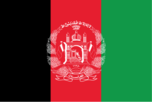
three equal horizontal bands of green (top), white, and black, with the national coat of arms superimposed in the middle of the white band and large Islamic lettering superimposed over the green and white bands
GNP/GDP methodology
In the "Economy" section, GNP/GDP dollar estimates for the great majority of countries are derived from purchasing power parity (PPP) calculations rather than from conversions at official currency exchange rates. The PPP method normally involves the use of international dollar price weights, which are applied to the quantities of goods and services produced in a given economy. In addition to the lack of reliable data from the majority of countries, the statistician faces a major difficulty in specifying, identifying, and allowing for the quality of goods and services. The division of a GNP/GDP estimate in local currency by the corresponding PPP estimate in dollars gives the PPP conversion rate. On average, one thousand dollars will buy the same market basket of goods in the US as one thousand dollars--converted to the local currency at the PPP conversion rate--will buy in the other country. Whereas PPP estimates for OECD countries are quite reliable, PPP estimates for developing countries are often rough approximations. The latter estimates are based on extrapolation of numbers published by the UN International Comparison Program and by Professors Robert Summers and Alan Heston of the University of Pennsylvania and their colleagues. Because currency exchange rates depend on a variety of international and domestic financial forces that often have little relation to domestic output, use of these rates is less satisfactory for calculating GNP/GDP than the PPP method. In developing countries with weak currencies the exchange rate estimate of GNP/GDP in dollars is typically one- fourth to one-half the PPP estimate. Furthermore, exchange rates may suddenly go up or down by 10% or more because of market forces or official fiat whereas real output has remained unchanged. On 12 January 1994, for example, the 14 countries of the African Financial Community (whose currencies are tied to the French franc) devalued their currencies by 50%. This move, of course, did not cut the real output of these countries by half. One additional caution: the proportion of, say, defense expenditures as a percent of GNP/GDP in local currency accounts may differ substantially from the proportion when GNP/GDP accounts are expressed in PPP terms, as, for example, when an observer estimates the dollar level of Russian or Japanese military expenditures;
Gross domestic product (GDP)
The value of all final goods and services produced within a nation in a given year.
Gross national product (GNP)
The value of all final goods and services produced within a nation in a given year, plus income earned abroad, minus income earned by foreigners from domestic production.
Gross world product (GWP)
The aggregate value of all goods and services produced worldwide in a given year.
Growth rate (population)
The annual percent change in the population, resulting from a surplus (or deficit) of births over deaths and the balance of migrants entering and leaving a country. The rate may be positive or negative.
Highways
total: 21,000 km paved: 2,800 km unpaved: gravel 1,650 km; earth 16,550 km (1984)
Illicit drugs
- There are five categories of illicit drugs--narcotics, stimulants, depressants (sedatives), hallucinogens, and cannabis. These categories include many drugs legally produced and prescribed by doctors as well as those illegally produced and sold outside medical channels. Cannabis (Cannabis sativa) is the common hemp plant, which provides hallucinogens with some sedative properties, and includes marijuana (pot, Acapulco gold, grass, reefer), tetrahydrocannabinol (THC, Marinol), hashish (hash), and hashish oil (hash oil). Coca (Erythroxylon coca) is a bush, and the leaves contain the stimulant cocaine. Coca is not to be confused with cocoa, which comes from cacao seeds and is used in making chocolate, cocoa, and cocoa butter. Cocaine is a stimulant derived from the leaves of the coca bush. Depressants (sedatives) are drugs that reduce tension and anxiety and include chloral hydrate, barbiturates (Amytal, Nembutal, Seconal, phenobarbital), benzodiazepines (Librium, Valium), methaqualone (Quaalude), glutethimide (Doriden), and others (Equanil, Placidyl, Valmid). Drugs are any chemical substances that effect a physical, mental, emotional, or behavioral change in an individual. Drug abuse is the use of any licit or illicit chemical substance that results in physical, mental, emotional, or behavioral impairment in an individual. Hallucinogens are drugs that affect sensation, thinking, self-awareness, and emotion. Hallucinogens include LSD (acid, microdot), mescaline and peyote (mexc, buttons, cactus), amphetamine variants (PMA, STP, DOB), phencyclidine (PCP, angel dust, hog), phencyclidine analogues (PCE, PCPy, TCP), and others (psilocybin, psilocyn). Hashish is the resinous exudate of the cannabis or hemp plant (Cannabis sativa). Heroin is a semisynthetic derivative of morphine. Mandrax is a synthetic chemical depressant, the same as, or similar to Quaalude. Marijuana is the dried leaves of the cannabis or hemp plant (Cannabis sativa). Narcotics are drugs that relieve pain, often induce sleep, and refer to opium, opium derivatives, and synthetic substitutes. Natural narcotics include opium (paregoric, parepectolin), morphine (MS-Contin, Roxanol), codeine (Tylenol with codeine, Empirin with codeine, Robitussan AC), and thebaine. Semisynthetic narcotics include heroin (horse, smack), and hydromorphone (Dilaudid). Synthetic narcotics include meperidine or Pethidine (Demerol, Mepergan), methadone (Dolophine, Methadose), and others (Darvon, Lomotil). Opium is the milky exudate of the incised, unripe seedpod of the opium poppy. Opium poppy (Papaver somniferum) is the source for many natural and semisynthetic narcotics. Poppy straw concentrate is the alkaloid derived from the mature dried opium poppy. Qat (kat, khat) is a stimulant from the buds or leaves of catha edulis that is chewed or drunk as tea. Stimulants are drugs that relieve mild depression, increase energy and activity, and include cocaine (coke, snow, crack), amphetamines (Desoxyn, Dexedrine), phenmetrazine (Preludin), methylphenidate (Ritalin), and others (Cylert, Sanorex, Tenuate).
- an illicit cultivator of opium poppy and cannabis for the international drug trade; world's second-largest opium producer after Burma (680 metric tons in 1993) and a major source of hashish
Imports
$737 million (c.i.f., 1991) commodities: food and petroleum products; most consumer goods partners: FSU countries, Pakistan, Iran, Japan, Singapore, India, South Korea, Germany
Independence
19 August 1919 (from UK)
Industrial production
growth rate 2.3% (FY91 est.); accounts for about 25% of GDP
Industries
small-scale production of textiles, soap, furniture, shoes, fertilizer, and cement; handwoven carpets; natural gas, oil, coal, copper
Infant mortality rate
- The number of deaths to infants under one year old in a given year per l,000 live births occurring in the same year.
- 155.8 deaths/1,000 live births (1994 est.)
Inflation rate (consumer prices)
NA%
Inland waterways
total navigability 1,200 km; chiefly Amu Darya, which handles vessels up to about 500 metric tons
International disputes
- This category includes a wide variety of situations that range from traditional bilateral boundary disputes to unilateral claims of one sort or another. Information regarding disputes over international boundaries and maritime boundaries has been reviewed by the Department of State. References to other situations involving borders or frontiers may also be included, such as resource disputes, geopolitical questions, or irredentist issues. However, inclusion does not necessarily constitute official acceptance or recognition by the US Government.
- periodic disputes with Iran over Helmand water rights; Iran supports clients in country, private Pakistani and Saudi sources also are active; power struggles among various groups for control of Kabul, regional rivalries among emerging warlords, traditional tribal disputes continue; support to Islamic fighters in Tajikistan's civil war; border dispute with Pakistan (Durand Line); support to Islamic militants worldwide by some factions
Irrigated land
- The figure refers to the land area that is artificially supplied with water.
- 26,600 sq km (1989 est.)
Judicial branch
an interim Chief Justice of the Supreme Court has been appointed, but a new court system has not yet been organized
Labor force
4.98 million by occupation: agriculture and animal husbandry 67.8%, industry 10.2%, construction 6.3%, commerce 5.0%, services and other 10.7% (1980 est.)
Land boundaries
total 5,529 km, China 76 km, Iran 936 km, Pakistan 2,430 km, Tajikistan 1,206 km, Turkmenistan 744 km, Uzbekistan 137 km
Land use
- Human use of the land surface is categorized as arable land--land cultivated for crops that are replanted after each harvest (wheat, maize, rice); permanent crops--land cultivated for crops that are not replanted after each harvest (citrus, coffee, rubber); meadows and pastures--land permanently used for herbaceous forage crops; forest and woodland--under dense or open stands of trees; and other--any land type not specifically mentioned above (urban areas, roads, desert).
- arable land: 12% permanent crops: 0% meadows and pastures: 46% forest and woodland: 3% other: 39%
Languages
Pashtu 35%, Afghan Persian (Dari) 50%, Turkic languages (primarily Uzbek and Turkmen) 11%, 30 minor languages (primarily Balochi and Pashai) 4%, much bilingualism
Leaders
The chief of state is the titular leader of the country who represents the state at official and ceremonial functions but is not involved with the day- to-day activities of the government. The head of government is the administrative leader who manages the day-to-day activities of the government. In the UK, the monarch is the chief of state, and the Prime Minister is the head of government. In the US, the President is both the chief of state and the head of government.
Legal system
a new legal system has not been adopted but the transitional government has declared it will follow Islamic law (Shari'a)
Legislative branch
a unicameral parliament consisting of 205 members was chosen by the shura in January 1993; non-functioning as of June 1993
Life expectancy at birth
- The average number of years to be lived by a group of people all born in the same year, if mortality at each age remains constant in the future.
- total population: 44.89 years male: 45.53 years female: 44.21 years (1994 est.)
Literacy
- There are no universal definitions and standards of literacy. Unless otherwise noted, all rates are based on the most common definition--the ability to read and write at a specified age. Detailing the standards that individual countries use to assess the ability to read and write is beyond the scope of this publication.
- age 15 and over can read and write (1990 est.) total population: 29% male: 44% female: 14%
Location
Southern Asia, between Iran and Pakistan
Manpower availability
males age 15-49 4,188,036; fit for military service 2,245,196; reach military age (22) annually 158,335 (1994 est.)
Map references
Asia, Middle East, Standard Time Zones of the World
Maritime claims
- The proximity of neighboring states may prevent some national claims from being extended the full distance.
- none; landlocked
Member of
AsDB, CP, ECO, ESCAP, FAO, G-77, IAEA, IBRD, ICAO, IDA, IDB, IFAD, IFC, ILO, IMF, INTELSAT, IOC, ITU, LORCS, NAM, OIC, UN, UNCTAD, UNESCO, UNIDO, UPU, WFTU, WHO, WMO, WTO
Merchant marine
All ships engaged in the carriage of goods. All commercial vessels (as opposed to all nonmilitary ships), which excludes tugs, fishing vessels, offshore oil rigs, etc.; also, a grouping of merchant ships by nationality or register. Captive register--A register of ships maintained by a territory, possession, or colony primarily or exclusively for the use of ships owned in the parent country; also referred to as an offshore register, the offshore equivalent of an internal register. Ships on a captive register will fly the same flag as the parent country, or a local variant of it, but will be subject to the maritime laws and taxation rules of the offshore territory. Although the nature of a captive register makes it especially desirable for ships owned in the parent country, just as in the internal register, the ships may also be owned abroad. The captive register then acts as a flag of convenience register, except that it is not the register of an independent state. Flag of convenience register--A national register offering registration to a merchant ship not owned in the flag state. The major flags of convenience (FOC) attract ships to their register by virtue of low fees, low or nonexistent taxation of profits, and liberal manning requirements. True FOC registers are characterized by having relatively few of the ships registered actually owned in the flag state. Thus, while virtually any flag can be used for ships under a given set of circumstances, an FOC register is one where the majority of the merchant fleet is owned abroad. It is also referred to as an open register. Flag state--The nation in which a ship is registered and which holds legal jurisdiction over operation of the ship, whether at home or abroad. Differences in flag state maritime legislation determine how a ship is manned and taxed and whether a foreign-owned ship may be placed on the register. Internal register--A register of ships maintained as a subset of a national register. Ships on the internal register fly the national flag and have that nationality but are subject to a separate set of maritime rules from those on the main national register. These differences usually include lower taxation of profits, manning by foreign nationals, and, usually, ownership outside the flag state (when it functions as an FOC register). The Norwegian International Ship Register and Danish International Ship Register are the most notable examples of an internal register. Both have been instrumental in stemming flight from the national flag to flags of convenience and in attracting foreign owned ships to the Norwegian and Danish flags. Merchant ship--A vessel that carries goods against payment of freight; commonly used to denote any nonmilitary ship but accurately restricted to commercial vessels only. Register--The record of a ship's ownership and nationality as listed with the maritime authorities of a country; also, the compendium of such individual ships' registrations. Registration of a ship provides it with a nationality and makes it subject to the laws of the country in which registered (the flag state) regardless of the nationality of the ship's ultimate owner.
Money figures
All money figures are expressed in contemporaneous US dollars unless otherwise indicated.
Names
conventional long form: Islamic State of Afghanistan conventional short form: Afghanistan local long form: Dowlat-e Eslami-ye Afghanestan local short form: Afghanestan former: Republic of Afghanistan
National holiday
Victory of the Muslim Nation, 28 April; Remembrance Day for Martyrs and Disabled, 4 May; Independence Day, 19 August
National product
- The total output of goods and services in a country in a given year. See Gross domestic product (GDP), Gross national product (GNP), and GNP/GDP methodology.
- GDP $NA
National product per capita
$NA
National product real growth rate
NA%
Nationality
noun: Afghan(s) adjective: Afghan
Natural resources
natural gas, petroleum, coal, copper, talc, barites, sulphur, lead, zinc, iron ore, salt, precious and semiprecious stones
Net migration rate
- The balance between the number of persons entering and leaving a country during the year per 1,000 persons (based on midyear population). An excess of persons entering the country is referred to as net immigration (3.56 migrants/1,000 population); an excess of persons leaving the country as net emigration (-9.26 migrants/1,000 population).
- 0 migrant(s)/1,000 population (1994 est.)
Note
- Information for the US and US dependencies was compiled from material in the public domain and does not represent Intelligence Community estimates. The Handbook of International Economic Statistics, published annually in September by the Central Intelligence Agency, contains detailed economic information for the Organization for Economic Cooperation and Development (OECD) countries, Eastern Europe, the newly independent republics of the former nations of Yugoslavia and the Soviet Union, and selected other countries. The Handbook can be obtained wherever The World Factbook is available. ***THE WORLD FACTBOOK 1994
- landlocked
Other political or pressure groups
the former resistance commanders are the major power brokers in the countryside; shuras (councils) of commanders are now administering most cities outside Kabul; ulema (religious scholars); tribal elders
Overview
Afghanistan is an extremely poor, landlocked country, highly dependent on farming (wheat especially) and livestock raising (sheep and goats). Economic considerations have played second fiddle to political and military upheavals during more than 14 years of war, including the nearly 10-year Soviet military occupation (which ended 15 February 1989). Over the past decade, one-third of the population fled the country, with Pakistan sheltering more than 3 million refugees and Iran about 3 million. About 1.4 million Afghan refugees remain in Pakistan and about 2 million in Iran. Another 1 million probably moved into and around urban areas within Afghanistan. Although reliable data are unavailable, gross domestic product is lower than 12 years ago because of the loss of labor and capital and the disruption of trade and transport.
Pipelines
petroleum products - Uzbekistan to Bagram and Turkmenistan to Shindand; natural gas 180 km
Political parties and leaders
current political organizations include Jamiat-i-Islami (Islamic Society), Burhanuddin RABBANI, Ahmad Shah MASOOD; Hizbi Islami-Gulbuddin (Islamic Party), Gulbuddin HIKMATYAR faction; Hizbi Islami-Khalis (Islamic Party), Yunis KHALIS faction; Ittihad-i-Islami Barai Azadi Afghanistan (Islamic Union for the Liberation of Afghanistan), Abdul Rasul SAYYAF; Harakat-Inqilab-i-Islami (Islamic Revolutionary Movement), Mohammad Nabi MOHAMMADI; Jabha-i-Najat-i-Milli Afghanistan (Afghanistan National Liberation Front), Sibghatullah MOJADDEDI; Mahaz-i-Milli-Islami (National Islamic Front), Sayed Ahamad GAILANI; Hizbi Wahdat (Islamic Unity Party), Abdul Ali MAZARI; Harakat-i-Islami (Islamic Movement), Mohammed Asif MOHSENI; Jumbesh-i-Milli Islami (National Islamic Movement), Rashid DOSTUM note: the former ruling Watan Party has been disbanded
Population
- Figures are estimates from the Bureau of the Census based on statistics from population censuses, vital statistics registration systems, or sample surveys pertaining to the recent past, and on assumptions about future trends. Starting with the 1993 Factbook demographic estimates for some countries (mostly African) have taken into account the effects of the growing incidence of AIDS infections; in 1993 these countries were Burkina, Burundi, Central African Republic, Congo, Cote d'Ivoire, Haiti, Kenya, Malawi, Rwanda, Tanzania, Uganda, Zaire, Zambia, Zimbabwe, Thailand, and Brazil.
- 16,903,400 (July 1994 est.)
Population growth rate
2.45% (1994 est.)
Ports
Shir Khan and Kheyrabad (river ports)
Railroads
9.6 km (single track) 1.524-meter gauge from Gushgy (formerly Kushka) (Turkmenistan) to Towraghondi and 15.0 km from Termiz (Uzbekistan) to Kheyrabad transshipment point on south bank of Amu Darya
Religions
Sunni Muslim 84%, Shi'a Muslim 15%, other 1%
Suffrage
undetermined; previously universal, male ages 15-50
Telecommunications
limited telephone, telegraph, and radiobroadcast services; television introduced in 1980; 31,200 telephones; numerous cellular telephones; broadcast stations - 5 AM, no FM, 1 TV; 1 satellite earth station
Telephone
- (202) 783-3238
- (202) 707-9527 This publication may be purchased in printed form, photocopy, microfiche, magnetic tape, or diskettes for microcomputers from: National Technical Information Service 5285 Port Royal Road Springfield, VA 22161
- (703) 487-4650 This publication may be purchased in photocopy or microform from: Photoduplication Service Library of Congress Washington, DC 20540-5234
- (202) 707-5640 The World Factbook is produced annually by the Central Intelligence Agency for the use of US Government officials, and the style, format, coverage, and content are designed to meet their specific requirements. Information was provided by the Bureau of the Census, Central Intelligence Agency, Defense Intelligence Agency, Defense Nuclear Agency, Department of State, Maritime Administration, National Science Foundation (Polar Information Program), Naval Maritime Intelligence Center, Office of Territorial and International Affairs, US Board on Geographic Names, US Coast Guard, and others.
- (703) 351-2053 Notes, Definitions, and Abbreviations A Afghanistan Albania Algeria American Samoa Andorra Angola Anguilla Antarctica Antigua and Barbuda Arctic Ocean Argentina Armenia Aruba Ashmore and Cartier Islands Atlantic Ocean Australia Austria Azerbaijan B Bahamas, The Bahrain Baker Island Bangladesh Barbados Bassas da India Belarus Belgium Belize Benin Bermuda Bhutan Bolivia Bosnia and Herzegovina Botswana Bouvet Island Brazil British Indian Ocean Territory British Virgin Islands Brunei Bulgaria Burkina Burma Burundi C Cambodia Cameroon Canada Cape Verde Cayman Islands Central African Republic Chad Chile China (also see separate Taiwan entry) Christmas Island Clipperton Island Cocos (Keeling) Islands Colombia Comoros Congo Cook Islands Coral Sea Islands Costa Rica Cote d'Ivoire Croatia Cuba Cyprus Czech Republic D Denmark Djibouti Dominica Dominican Republic E Ecuador Egypt El Salvador Equatorial Guinea Eritrea Estonia Ethiopia Europa Island F Falkland Islands (Islas Malvinas) Faroe Islands Fiji Finland France French Guiana French Polynesia French Southern and Antarctic Lands G Gabon Gambia, The Gaza Strip Georgia Germany Ghana Gibraltar Glorioso Islands Greece Greenland Grenada Guadeloupe Guam Guatemala Guernsey Guinea Guinea-Bissau Guyana H Haiti Heard Island and McDonald Islands Holy See (Vatican City) Honduras Hong Kong Howland Island Hungary I Iceland India Indian Ocean Indonesia Iran Iraq Ireland Israel (also see separate Gaza Strip and West Bank entries) Italy J Jamaica Jan Mayen Japan Jarvis Island Jersey Johnston Atoll Jordan (also see separate West Bank entry) Juan de Nova Island K Kazakhstan Kenya Kingman Reef Kiribati Korea, North Korea, South Kuwait Kyrgyzstan L Laos Latvia Lebanon Lesotho Liberia Libya Liechtenstein Lithuania Luxembourg M Macau Macedonia entry follows Thailand Madagascar Malawi Malaysia Maldives Mali Malta Man, Isle of Marshall Islands Martinique Mauritania Mauritius Mayotte Mexico Micronesia, Federated States of Midway Islands Moldova Monaco Mongolia Montserrat Morocco Mozambique N Namibia Nauru Navassa Island Nepal Netherlands Netherlands Antilles New Caledonia New Zealand Nicaragua Niger Nigeria Niue Norfolk Island Northern Mariana Islands Norway O Oman P Pacific Islands (Palau), Trust Territory of the Pacific Ocean Pakistan Palmyra Atoll Panama Papua New Guinea Paracel Islands Paraguay Peru Philippines Pitcairn Islands Poland Portugal Puerto Rico Q Qatar R Reunion Romania Russia Rwanda S Saint Helena Saint Kitts and Nevis Saint Lucia Saint Pierre and Miquelon Saint Vincent and the Grenadines San Marino Sao Tome and Principe Saudi Arabia Senegal Serbia and Montenegro Seychelles Sierra Leone Singapore Slovakia Slovenia Solomon Islands Somalia South Africa South Georgia and the South Sandwich Islands Spain Spratly Islands Sri Lanka Sudan Suriname Svalbard Swaziland Sweden Switzerland Syria T Taiwan Tajikistan Tanzania Thailand The Former Yugoslav Republic of Macedonia Togo Tokelau Tonga Trinidad and Tobago Tromelin Island Tunisia Turkey Turkmenistan Turks and Caicos Islands Tuvalu U Uganda Ukraine United Arab Emirates United Kingdom United States Uruguay Uzbekistan V Vanuatu Venezuela Vietnam Virgin Islands W Wake Island Wallis and Futuna West Bank Western Sahara Western Samoa World Y Yemen Z Zaire Zambia Zimbabwe Appendixes A: The United Nations System B: Abbreviations for International Organizations and Groups C: International Organizations and Groups D: Abbreviations for Selected International Environmental Agreements E: Selected International Environmental Agreements F: Weights and Measures G: Cross-Reference List of Geographic Names Reference Maps The World North America Central America and the Caribbean South America Europe Ethnic Groups in Eastern Europe Middle East Africa Asia Commonwealth of Independent States--European States Commonwealth of Independent States--Central Asian States Southeast Asia Oceania Arctic Region Antarctic Region Standard Time Zones of the World There have been some significant changes in this edition. The format and content of the former entries on the Environment have been changed, and two new appendixes have been added--Appendix D: Abbreviations for Selected International
Terrain
mostly rugged mountains; plains in north and southwest
Total fertility rate
- The average number of children that would be born per woman if all women lived to the end of their childbearing years and bore children according to a given fertility rate at each age.
- 6.27 children born/woman (1994 est.)
Type
transitional government
Unemployment rate
NA%
US diplomatic representation
none; embassy was closed in January 1989
Years
All year references are for the calendar year (CY) unless indicated as fiscal year (FY).