Introduction
Humans arrived in the Palauan archipelago from Southeast Asia around 1000 B.C. and developed a complex, highly organized matrilineal society where high-ranking women picked the chiefs. The islands were the westernmost part of the widely scattered Pacific islands north of New Guinea that Spanish explorers named the Caroline Islands in the 17th century. The 18th and 19th centuries saw occasional visits of whalers and traders as Spain gained some influence in the islands and administered it from the Philippines. Spain sold Palau to Germany in 1899 after losing the Philippines in the Spanish-American War.<br><br>Japan seized Palau in 1914, was granted a League of Nations mandate to administer the islands in 1920, and made Koror the capital of its South Seas Mandate in 1922. By the outbreak of World War II, there were four times as many Japanese living in Koror as Palauans. In 1944, the US invasion of the island of Peleliu was one of the bloodiest island fights of the Pacific War. After the war, Palau became part of the US-administered Trust Territory of the Pacific Islands.<br><br>Palau voted against joining the Federated States of Micronesia in 1978 and adopted its own constitution in 1981, which stated that Palau was a nuclear-free country. In 1982, Palau signed a Compact of Free Association (COFA) with the US, which granted Palau financial assistance and access to many US domestic programs in exchange for exclusive US military access and defense responsibilities. However, many Palauans saw the COFA as incompatible with the Palauan Constitution because of the US military’s nuclear arsenal, and seven referenda failed to achieve ratification. Following a constitutional amendment and eighth referendum in 1993, the COFA was ratified and entered into force in 1994 when the islands gained their independence. Its funding was renewed in 2010.<br><br>Palau has been on the frontlines of combatting climate change and protecting marine resources. In 2011, Palau banned commercial shark fishing and created the world’s first shark sanctuary. In 2017, Palau began stamping the Palau Pledge into passports, reminding visitors to act in ecologically and culturally responsible ways. In 2020, Palau banned coral reef-toxic sunscreens and expanded its fishing prohibition to include 80% of its exclusive economic zone.
Geography
- Land
- 459 sq km
- Total
- 459 sq km
- Water
- 0 sq km
slightly more than 2.5 times the size of Washington, D.C.
tropical; hot and humid; wet season May to November
1,519 km
Oceania
- Highest point
- Mount Ngerchelchuus 242 m
- Lowest point
- Pacific Ocean 0 m
7 30 N, 134 30 E
westernmost archipelago in the Caroline chain, consists of six island groups totaling more than 300 islands; includes world-famous Rock Islands
0 sq km (2022)
- border countries
- ISR, EGY, JOR
- number of neighbors
- 3
- Total
- 0 km
- Agricultural land
- 9.3% (2023 est.)
- Agricultural land: arable land
- arable land: 0.7% (2023 est.)
- Agricultural land: permanent crops
- permanent crops: 4.3% (2023 est.)
- Agricultural land: permanent pasture
- permanent pasture: 4.3% (2023 est.)
- arable land
- 6.95%
- Forest
- 90.6% (2023 est.)
- Other
- 0% (2023 est.)
- permanent crops
- 11.83%
No
Oceania, group of islands in the North Pacific Ocean, southeast of the Philippines
- Google Maps
- https://goo.gl/maps/MVasQBbUkQP7qQDR9
- OpenStreetMap
- https://www.openstreetmap.org/relation/571805
Oceania
- Contiguous zone
- 24 nm
- Continental shelf
- 200 nm
- Exclusive economic zone
- 200 nm
- Territorial sea
- 12 nm
typhoons (June to December)
forests, minerals (especially gold), marine products, deep-seabed minerals
most of the population is located on the southern end of the main island of Babelthuap
Micronesia
varying topography from the high, mountainous main island of Babelthuap to low, coral islands usually fringed by large barrier reefs
- UTC+09:00
- number of time zones
- 1
People and Society
- 0-14 years
- 17.5% (male 1,976/female 1,849)
- 15-64 years
- 71.3% (male 8,647/female 6,935)
- 65 years and over
- 11.2% (2024 est.) (male 612/female 1,845)
11.53 births/1,000 population (2025 est.)
48.3% (2020 est.)
- 8.52 deaths/1,000 population (2025 est.)
- adult female
- 171 per 1,000
- adult male
- 365 per 1,000
- Elderly dependency ratio
- 16.7 (2025 est.)
- Potential support ratio
- 6 (2025 est.)
- Total dependency ratio
- 41.6 (2025 est.)
- Youth dependency ratio
- 24.9 (2025 est.)
- improved total
- 80.64%
- Improved: rural
- rural: 99.4% of population (2022 est.)
- Improved: total
- total: 99.6% of population (2022 est.)
- Improved: urban
- urban: 99.6% of population (2022 est.)
- Unimproved: rural
- rural: 0.6% of population (2022 est.)
- Unimproved: total
- total: 0.4% of population (2022 est.)
- Unimproved: urban
- urban: 0.4% of population (2022 est.)
- Education expenditure (% GDP)
- 3.5% of GDP (2023 est.)
- Education expenditure (% national budget)
- 9.8% national budget (2023 est.)
5 % of GDP
Palauan (Micronesian with Malayan and Melanesian admixtures) 70.6%, Carolinian 1.2%, Asian 26.5%, other 1.7% (2020 est.)
0.83 (2025 est.)
- 11 % of GDP
- Health expenditure (as % of GDP)
- 16.4% of GDP (2021)
- Health expenditure (as % of national budget)
- 9.5% of national budget (2022 est.)
- Female
- 8.8 deaths/1,000 live births
- Male
- 12.7 deaths/1,000 live births
- neonatal
- 9 deaths/1,000 live births
- Total
- 10.6 deaths/1,000 live births (2025 est.)
- Palauan (official on most islands) 65.2%, other Micronesian 1.9%, English (official) 19.1%, Filipino 9.9%, Chinese 1.2%, other 2.8% (2015 est.)
- languages
- English, Palauan
- note
- <strong>note:</strong> Sonsoralese is official in Sonsoral; Tobian is official in Tobi; Angaur and Japanese are official in Angaur
- number of languages
- 2
- Female
- 78.5 years
- Male
- 72 years
- Total population
- 75.2 years (2024 est.)
- Female
- 100% (2020 est.)
- Male
- 100% (2020 est.)
- Total population
- 100% (2020 est.)
277 NGERULMUD (capital) (2018)
89 deaths/100,000 live births (2023 est.)
- Female
- 37.4 years
- Male
- 34.1 years
- Total
- 35.5 years (2025 est.)
36 births/1,000 women 15-19
- Adjective
- Palauan
- Noun
- Palauan(s)
0.77 migrant(s)/1,000 population (2025 est.)
55.3% (2016)
1.81 physicians/1,000 population (2023)
- Female
- 10,690
- Male
- 11,257
- Total
- 21,947 (2025 est.)
0.38% (2025 est.)
Roman Catholic 46.9%, Protestant 30.9% (Evangelical 24.6%, Seventh Day Adventist 5%, other Protestant 1.4%), Modekngei 5.1% (indigenous to Palau), Muslim 4.9%, other 12.3% (2020 est.)
- improved total
- 73.51%
- Improved: rural
- rural: 98.4% of population (2022 est.)
- Improved: total
- total: 99% of population (2022 est.)
- Improved: urban
- urban: 99.1% of population (2022 est.)
- Unimproved: rural
- rural: 1.6% of population (2022 est.)
- Unimproved: total
- total: 1% of population (2022 est.)
- Unimproved: urban
- urban: 0.9% of population (2022 est.)
- Female
- 16 years (2023 est.)
- Male
- 14 years (2023 est.)
- Total
- 15 years (2023 est.)
- 0-14 years
- 1.07 male(s)/female
- 15-64 years
- 1.25 male(s)/female
- 65 years and over
- 0.33 male(s)/female
- At birth
- 1.06 male(s)/female
- Total population
- 1.06 male(s)/female (2024 est.)
- Female
- 6.8% (2025 est.)
- Male
- 25.2% (2025 est.)
- Total
- 16.3% (2025 est.)
1.7 children born/woman (2025 est.)
- Rate of urbanization
- 1.59% annual rate of change (2020-25 est.)
- Urban population
- 82.4% of total population (2023)
- measles
- 89%
Government
16 states; Aimeliik, Airai, Angaur, Hatohobei, Kayangel, Koror, Melekeok, Ngaraard, Ngarchelong, Ngardmau, Ngatpang, Ngchesar, Ngeremlengui, Ngiwal, Peleliu, Sonsorol
- Etymology
- the name comes from a Palauan term meaning "place of fermented angelfish;" the site of the capital was the traditional location for women to gather and offer fermented angelfish to the gods
- Geographic coordinates
- 7 30 N, 134 37 E
- Name
- Ngerulmud
- Time difference
- UTC+9 (14 hours ahead of Washington, DC, during Standard Time)
- Citizenship by birth
- no
- Citizenship by descent only
- at least one parent must be a citizen of Palau
- Dual citizenship recognized
- no
- Residency requirement for naturalization
- note - no procedure for naturalization
- svg
- https://mainfacts.com/media/images/coats_of_arms/pw.svg
- Amendment process
- proposed by a constitutional convention (held at least once every 15 years with voter approval), by public petition of at least 25% of eligible voters, or by a resolution adopted by at least three fourths of National Congress members; passage requires approval by a majority of votes in at least three fourths of the states in the next regular general election
- History
- ratified 9 July 1980, effective 1 January 1981
- alternative spellings
- PW, Republic of Palau, Beluu er a Belau
- Conventional long form
- Republic of Palau
- Conventional short form
- Palau
- Etymology
- from the Palauan name for the islands, Belau, which likely derives from the Palauan word <em>beluu</em>, meaning "village"
- FIFA code
- PLE
- Former
- Trust Territory of the Pacific Islands, Palau District
- Local long form
- Beluu er a Belau
- local long form (ara)
- دولة فلسطين
- local long form (eng)
- Republic of Palau
- Local short form
- Belau
- Chief of mission
- Ambassador Joel EHRENDREICH (since 29 September 2023)
- Email address and website
- <br>ConsularKoror@state.gov<br><br>https://pw.usembassy.gov/
- Embassy
- Omsangel/Beklelachieb, Airai 96940
- FAX
- [680] 587-2911
- Mailing address
- 4260 Koror Place, Washington, DC 20521-4260
- Telephone
- [680] 587-2920
- Chancery
- 1701 Pennsylvania Avenue NW, Suite 200, Washington, DC 20006
- Chief of mission
- Ambassador Hersey KYOTA (since 12 November 1997)
- Consulate(s)
- Tamuning (Guam)
- Email address and website
- <br>info@palauembassy.org<br><br>https://www.palauembassy.org/
- FAX
- [1] (202) 452-6281
- Telephone
- [1] (202) 349-8598
- Cabinet
- Cabinet appointed by the president with the advice and consent of the Senate; also includes the vice president; the Council of Chiefs consists of chiefs from each of the states who advise the president on issues concerning traditional laws, customs, and their relationship to the constitution and laws
- Chief of state
- President Surangel WHIPPS, Jr. (since 21 January 2021)
- Election results
- <em><br>2024: </em>Surangel WHIPPS, Jr. elected president in second round; percent of vote - Surangel WHIPPS, Jr. (independent) 57.7%, Tommy REMENGESAU (independent) 42.1%, other 0.2% <br><br><em>2020: </em>Surangel WHIPPS, Jr. elected president in second round; percent of vote - Surangel WHIPPS, Jr. (independent) 56.7%, Raynold OILUCH (independent) 43.3%
- Election/appointment process
- president and vice president directly elected on separate ballots by absolute-majority popular vote in 2 rounds, if needed, for a 4-year term (eligible for a second term)
- Expected date of next election
- November 2028
- Head of government
- President Surangel WHIPPS, Jr. (since 21 January 2021)
- Most recent election date
- 5 November 2024
- Note
- <strong>note:</strong> the president is both chief of state and head of government
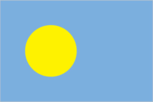
<strong>description:</strong> light blue with a large yellow disk to the left side<br><br><strong>meaning:</strong> blue stands for the ocean, and the disk for the moon, which is considered a symbol of peace, love, and tranquility
The flag of Palau has a light blue field with a large golden-yellow circle that is offset slightly towards the hoist side of center.
- svg
- https://flagcdn.com/pw.svg
presidential republic in free association with the US
1 October 1994 (from the US-administered UN trusteeship)
has not submitted an ICJ jurisdiction declaration; non-party state to the ICCt
ACP, ADB, AOSIS, FAO, IAEA, IBRD, ICAO, ICRM, IDA, IFC, IFRCS, ILO, IMF, IMO, IMSO, IOC, IPU, MIGA, OPCW, PIF, Sparteca, SPC, UN, UNAMID, UNCTAD, UNESCO, WHO, WIPO
- Highest court(s)
- Supreme Court (consists of the chief justice and 3 associate justices organized into appellate trial divisions; the Supreme Court organization also includes the Common Pleas and Land Courts)
- Judge selection and term of office
- justices nominated by a 7-member independent body consisting of judges, presidential appointees, and lawyers and appointed by the president; judges can serve until mandatory retirement at age 65
- Subordinate courts
- National Court and other inferior courts
mixed system of civil, common, and customary law
- Legislative structure
- bicameral
- Legislature name
- National Congress (Olbiil Era Kelulau)
- Chamber name
- House of Delegates
- Electoral system
- plurality/majority
- Expected date of next election
- November 2028
- Most recent election date
- 11/5/2024
- Number of seats
- 16 (all directly elected)
- Percentage of women in chamber
- 25%
- Scope of elections
- full renewal
- Term in office
- 4 years
- Chamber name
- Senate
- Electoral system
- plurality/majority
- Expected date of next election
- November 2028
- Most recent election date
- 11/5/2024
- Number of seats
- 15 (all directly elected)
- Percentage of women in chamber
- 13.3%
- Scope of elections
- full renewal
- Term in office
- 4 years
blue, yellow
- Selected World Heritage Site locales
- Rock Islands Southern Lagoon
- Total World Heritage Sites
- 1 (mixed)
Constitution Day, 9 July (1981); Independence Day, 1 October (1994)
bai (native meeting house)
although not expressly forbidden by law, Palau does not have political parties or coalitions
Monday
18 years of age; universal
Yes
Economy
coconuts, cassava (manioc, tapioca), sweet potatoes; fish, pigs, chickens, eggs, bananas, papaya, breadfruit, calamansi, soursop, Polynesian chestnuts, Polynesian almonds, mangoes, taro, guava, beans, cucumbers, squash/pumpkins (various), eggplant, green onions, kangkong (watercress), cabbages (various), radishes, betel nuts, melons, peppers, noni, okra
- Expenditures
- $152.398 million (2020 est.)
- Note
- <b>note:</b> central government revenues and expenses (excluding grants/extrabudgetary units/social security funds) converted to US dollars at average official exchange rate for year indicated
- Revenues
- $127.757 million (2020 est.)
- code
- USD
- name
- United States dollar (USD) [$]
- $-2,899,047,119
- Current account balance 2020
- -$115.61 million (2020 est.)
- Current account balance 2021
- -$115.739 million (2021 est.)
- Current account balance 2022
- -$135.428 million (2022 est.)
- Note
- <b>note:</b> balance of payments - net trade and primary/secondary income in current dollars
high-income Pacific island economy; environmentally fragile; subsistence agriculture and fishing industries; US aid reliance; rebounding post-pandemic tourism industry and services sector; very high living standard and low unemployment
<p>the US dollar is used</p>
- $2.88 billion
- Exports 2020
- $52.897 million (2020 est.)
- Exports 2021
- $10.566 million (2021 est.)
- Exports 2022
- $24.48 million (2022 est.)
- Note
- <b>note:</b> balance of payments - exports of goods and services in current dollars
- ships, refined petroleum (2023)
- note
- <strong>note:</strong> top export commodities based on value in dollars over $500,000
- India 41%, Turkey 26%, Taiwan 10%, USA 9%, Japan 5% (2023)
- note
- <b>note:</b> top five export partners based on percentage share of exports
- net inflows
- $162.18 million
- Exports of goods and services
- 13.5% (2022 est.)
- Government consumption
- 36.3% (2022 est.)
- Household consumption
- 77.8% (2022 est.)
- Imports of goods and services
- -74.3% (2022 est.)
- Investment in fixed capital
- 36.6% (2022 est.)
- Investment in inventories
- 1.8% (2022 est.)
- Note
- <b>note:</b> figures may not total 100% due to rounding or gaps in data collection
- Agriculture
- 3% (2023 est.)
- Industry
- 9.9% (2023 est.)
- Note
- <b>note:</b> figures may not total 100% due to non-allocated consumption not captured in sector-reported data
- Services
- 76.7% (2023 est.)
- $281.849 million (2023 est.)
- note
- <b>note:</b> data in current dollars at official exchange rate
$2,592
33.7 (2016)
$14.62 billion
$2,710
23 % of GDP
- $8.26 billion
- Imports 2020
- $207.224 million (2020 est.)
- Imports 2021
- $169.938 million (2021 est.)
- Imports 2022
- $216.681 million (2022 est.)
- Note
- <b>note:</b> balance of payments - imports of goods and services in current dollars
- ships, refined petroleum, additive manufacturing machines, cars, plastic products (2023)
- note
- <b>note:</b> top five import commodities based on value in dollars
- Italy 32%, China 25%, USA 11%, Turkey 10%, Japan 6% (2023)
- note
- <b>note:</b> top five import partners based on percentage share of imports
- -19.5% (2023 est.)
- note
- <strong>note:</strong> annual % change in industrial value added based on constant local currency
tourism, fishing, subsistence agriculture
- 53.67%
- Inflation rate (consumer prices) 2022
- 12.4% (2022 est.)
- Inflation rate (consumer prices) 2023
- 12.8% (2023 est.)
- Inflation rate (consumer prices) 2024
- 2.2% (2024 est.)
- Note
- <b>note:</b> annual % change based on consumer prices
- total
- 1.39 million persons
- agriculture
- 6.34%
- industry
- 29.88%
- services
- 63.78%
- Note
- <b>note:</b> central government debt as a % of GDP
- Public debt 2019
- 85.2% of GDP (2019 est.)
- $23.12 billion
- Note
- <b>note:</b> data in 2021 dollars
- Real GDP (purchasing power parity) 2021
- $278.538 million (2021 est.)
- Real GDP (purchasing power parity) 2022
- $274.866 million (2022 est.)
- Real GDP (purchasing power parity) 2023
- $280.025 million (2023 est.)
- -26.56%
- Note
- <b>note:</b> annual GDP % growth based on constant local currency
- Real GDP growth rate 2021
- -13.8% (2021 est.)
- Real GDP growth rate 2022
- -1.3% (2022 est.)
- Real GDP growth rate 2023
- 1.9% (2023 est.)
- $4,371
- Note
- <b>note:</b> data in 2021 dollars
- Real GDP per capita 2021
- $15,700 (2021 est.)
- Real GDP per capita 2022
- $15,500 (2022 est.)
- Real GDP per capita 2023
- $15,800 (2023 est.)
- $735.61 million
- Note
- <b>note:</b> personal transfers and compensation between resident and non-resident individuals/households/entities
- Remittances 2021
- 0.8% of GDP (2021 est.)
- Remittances 2022
- 0.8% of GDP (2022 est.)
- Remittances 2023
- 0.7% of GDP (2023 est.)
$1.33 billion
- 18.1% (of GDP) (2020 est.)
- note
- <b>note:</b> central government tax revenue as a % of GDP
24.42%
- female
- 56.62%
- male
- 31.64%
- total
- 36.09%
Energy
- Electrification - rural areas
- 100%
- Electrification - total population
- 100% (2022 est.)
- Electrification - urban areas
- 99.9%
- fossil fuels
- 75.54%
- hydroelectric
- 0%
- nuclear
- 0%
- renewable
- 24.46%
15.4%
Communications
- per 100 inhabitants
- 8 per 100
- Subscriptions per 100 inhabitants
- 7 (2023 est.)
- Total
- 1,000 (2023 est.)
no broadcast TV stations; a cable TV network covers the major islands and provides access to 4 local cable stations, rebroadcasts (on a delayed basis) of a number of US stations, as well as access to a number of real-time satellite TV channels; about a half dozen radio stations (1 government-owned) (2019)
.pw
- Percent of population
- 27% (2004 est.)
96940
+680
- Subscriptions per 100 inhabitants
- 45 (2023 est.)
- Total subscriptions
- 8,000 (2023 est.)
- subscriptions per 100
- 77 per 100
- Subscriptions per 100 inhabitants
- 135 (2023 est.)
- Total subscriptions
- 24,000 (2023 est.)
Transportation
3 (2025)
T8
Right
- By type
- bulk carrier 49, container ship 8, general cargo 200, oil tanker 52, other 118
- Total
- 427 (2023)
- Key ports
- Malakal Harbor
- Large
- 0
- Medium
- 0
- Ports with oil terminals
- 1
- Small
- 0
- Total ports
- 1 (2024)
- Very small
- 1
PAL
Military and Security
under the Compact of Free Association between Palau and the US, the US is responsible for the defense of Palau, and the US military is granted access to the islands; the COFA also allows citizens of Palau to serve in the US armed forces<br><br>Palau has a "shiprider" agreement with the US, which allows local maritime law enforcement officers to embark on US Coast Guard (USCG) and US Navy (USN) vessels, including to board and search vessels suspected of violating laws or regulations within Palau's designated exclusive economic zone (EEZ) or on the high seas; "shiprider" agreements also enable USCG personnel and USN vessels with embarked USCG law enforcement personnel to work with host nations to protect critical regional resources (2025)
no regular military forces; the Bureau of Public Safety (Ministry of Justice) has divisions for police functions and maritime security (2025)
Transnational Issues
- Refugees
- 5 (2024 est.)
Environment
inadequate facilities for disposal of solid waste; threats to the marine ecosystem from sand and coral dredging, illegal fishing practices, and overfishing; rising sea level; coral bleaching; drought
- Party to
- Biodiversity, Climate Change, Climate Change-Kyoto Protocol, Climate Change-Paris Agreement, Comprehensive Nuclear Test Ban, Desertification, Endangered Species, Hazardous Wastes, Law of the Sea, Ozone Layer Protection, Ship Pollution, Wetlands, Whaling
- Signed, but not ratified
- none of the selected agreements
7.9 micrograms per cubic meter (2019 est.)
10 % of total land area
24 % of total
41 % of internal resources
- Municipal solid waste generated annually
- 9,400 tons (2024 est.)