Introduction
Once the seat of Viking raiders and later a major north European power, Denmark has evolved into a modern, prosperous nation that is part of the general political and economic integration of Europe. It joined NATO in 1949 and the EEC (now the EU) in 1973. The country has opted out of certain elements of the EU's Maastricht Treaty, including the European Economic and Monetary Union and justice and home affairs issues. a 2022 referendum resulted in the removal of Denmark's 30-year opt-out on defense issues, now allowing Denmark to participate fully in the EU's Common Security and Defense Policy.
Geography
- Land
- 42,434 sq km
- Note
- <strong>note:</strong> includes the island of Bornholm in the Baltic Sea and the rest of metropolitan Denmark (the Jutland Peninsula, and the major islands of Sjaelland and Fyn) but excludes the Faroe Islands and Greenland
- Total
- 43,094 sq km
- Water
- 660 sq km
slightly less than twice the size of Massachusetts; about two-thirds the size of West Virginia
temperate; humid and overcast; mild, windy winters and cool summers
7,314 km
Europe
- Highest point
- Store Mollehoj 171 m
- Lowest point
- Lammefjord -7 m
- Mean elevation
- 34 m
56 00 N, 10 00 E
composed of the Jutland Peninsula and a group of more than 400 islands (Danish Archipelago); controls Danish Straits (Skagerrak and Kattegat) linking Baltic and North Seas; about one-quarter of the population lives in greater Copenhagen
2,420 sq km (2022)
- Border countries
- Germany 140 km; Canada 1.3 km
- number of neighbors
- 1
- Total
- 141 km
- Agricultural land
- 65.5% (2023 est.)
- Agricultural land: arable land
- arable land: 59.1% (2023 est.)
- Agricultural land: permanent crops
- permanent crops: 0.7% (2023 est.)
- Agricultural land: permanent pasture
- permanent pasture: 5.6% (2023 est.)
- arable land
- 59.13%
- Forest
- 16% (2023 est.)
- Other
- 18.5% (2023 est.)
- permanent crops
- 0.74%
No
Northern Europe, bordering the Baltic Sea and the North Sea, on a peninsula north of Germany (Jutland); also includes several major islands (Sjaelland, Fyn, and Bornholm)
- Google Maps
- https://goo.gl/maps/UddGPN7hAyrtpFiT6
- OpenStreetMap
- https://www.openstreetmap.org/relation/50046
Europe
- Contiguous zone
- 24 nm
- Continental shelf
- 200-m depth or to the depth of exploitation
- Exclusive economic zone
- 200 nm
- Territorial sea
- 12 nm
flooding is a threat in some areas of the country (e.g., parts of Jutland, along the southern coast of the island of Lolland) that are protected from the sea by a system of dikes
petroleum, natural gas, fish, arable land, salt, limestone, chalk, stone, gravel and sand
population centers tend to be along coastal areas, particularly in Copenhagen and the eastern side of the country's mainland
Northern Europe
low and flat to gently rolling plains
- UTC-04:00, UTC-03:00, UTC-01:00, UTC, UTC+01:00
- number of time zones
- 5
People and Society
- 0-14 years
- 16.2% (male 496,793/female 471,018)
- 15-64 years
- 62.9% (male 1,903,315/female 1,856,615)
- 65 years and over
- 20.8% (2024 est.) (male 575,153/female 670,242)
- Beer
- 3.42 liters of pure alcohol (2019 est.)
- Other alcohols
- 0 liters of pure alcohol (2019 est.)
- Spirits
- 1.66 liters of pure alcohol (2019 est.)
- Total
- 9.16 liters of pure alcohol (2019 est.)
- Wine
- 4.08 liters of pure alcohol (2019 est.)
9.81 births/1,000 population (2025 est.)
- Women married by age 18
- 0.7% (2021)
54.3% (2024 est.)
- 10.56 deaths/1,000 population (2025 est.)
- adult female
- 41 per 1,000
- adult male
- 69 per 1,000
- Elderly dependency ratio
- 32.7 (2025 est.)
- Potential support ratio
- 3.1 (2025 est.)
- Total dependency ratio
- 57.2 (2025 est.)
- Youth dependency ratio
- 24.5 (2025 est.)
- improved total
- 99.92%
- Improved: rural
- rural: 100% of population (2022 est.)
- Improved: total
- total: 100% of population (2022 est.)
- Improved: urban
- urban: 100% of population (2022 est.)
- Unimproved: rural
- rural: 0% of population (2022 est.)
- Unimproved: total
- total: 0% of population (2022 est.)
- Unimproved: urban
- urban: 0% of population (2022 est.)
- Education expenditure (% GDP)
- 6.4% of GDP (2022 est.)
- Education expenditure (% national budget)
- 14.2% national budget (2022 est.)
6 % of GDP
- Danish (includes Greenlandic (who are predominantly Inuit) and Faroese) 84.2%, Turkish 1.1%, other 14.7% (largest groups are Polish, Romanian, Syrian, Ukrainian, German, and Iraqi) (2023 est.)
- note
- <strong>note:</strong> data represent population by country of origin
0.73 (2025 est.)
- 9 % of GDP
- Health expenditure (as % of GDP)
- 9.5% of GDP (2022)
- Health expenditure (as % of national budget)
- 17.7% of national budget (2022 est.)
0.1%
2.5 beds/1,000 population (2021 est.)
- Female
- 2.5 deaths/1,000 live births
- Male
- 3.4 deaths/1,000 live births
- neonatal
- 2 deaths/1,000 live births
- Total
- 3.1 deaths/1,000 live births (2025 est.)
- Languages
- Danish, Faroese, Greenlandic (an Inuit dialect), German (small minority); note - English is the predominant second language
- Major-language sample(s)
- <br>Verdens Faktabog, den uundværlig kilde til grundlæggende oplysninger. (Danish)<br><br>The World Factbook, the indispensable source for basic information.
- number of languages
- 1
- Female
- 84.1 years
- Male
- 80.2 years
- Total population
- 82.1 years (2024 est.)
1.381 million COPENHAGEN (capital) (2023)
4 deaths/100,000 live births (2023 est.)
- Female
- 43.4 years
- Male
- 41 years
- Total
- 42.2 years (2025 est.)
29.8 years (2020 est.)
- Adjective
- Danish
- Noun
- Dane(s)
7.12 migrant(s)/1,000 population (2025 est.)
19.7% (2016)
7.24 physicians/1,000 population (2021)
- Female
- 3,049,793
- Male
- 3,001,698
- Total
- 6,051,491 (2025 est.)
0.64% (2025 est.)
Evangelical Lutheran (official) 71.4%, Muslim 4.3%, other/none/unspecified (denominations include Roman Catholic, Jehovah's Witness, Serbian Orthodox Christian, Jewish, Baptist, Buddhist, Church of Jesus Christ, Pentecostal, and nondenominational Christian) 24.3% (2024 est.)
- improved total
- 98.9%
- Improved: rural
- rural: 100% of population (2022 est.)
- Improved: total
- total: 100% of population (2022 est.)
- Improved: urban
- urban: 100% of population (2022 est.)
- Unimproved: rural
- rural: 0% of population (2022 est.)
- Unimproved: total
- total: 0% of population (2022 est.)
- Unimproved: urban
- urban: 0% of population (2022 est.)
- Female
- 19 years (2023 est.)
- Male
- 18 years (2023 est.)
- Total
- 18 years (2023 est.)
- 0-14 years
- 1.05 male(s)/female
- 15-64 years
- 1.03 male(s)/female
- 65 years and over
- 0.86 male(s)/female
- At birth
- 1.07 male(s)/female
- Total population
- 0.99 male(s)/female (2024 est.)
- Female
- 14.3% (2025 est.)
- Male
- 14.4% (2025 est.)
- Total
- 14.3% (2025 est.)
1.5 children born/woman (2025 est.)
- Rate of urbanization
- 0.54% annual rate of change (2020-25 est.)
- Urban population
- 88.5% of total population (2023)
- measles
- 94%
Government
metropolitan Denmark - 5 regions (<em>regioner</em>, singular - <em>region</em>); Hovedstaden (Capital), Midtjylland (Central Jutland), Nordjylland (North Jutland), Sjaelland (Zealand), Syddanmark (Southern Denmark)
- Daylight saving time
- +1hr, begins last Sunday in March; ends last Sunday in October; note - applies to continental Denmark only, not to its North Atlantic components
- Etymology
- name derives from the Danish words <em>køber </em>(merchant or buyer) and <em>havn </em>(harbor or port)
- Geographic coordinates
- 55 40 N, 12 35 E
- Name
- Copenhagen
- Time difference
- UTC+1 (6 hours ahead of Washington, DC, during Standard Time)
- Citizenship by birth
- no
- Citizenship by descent only
- at least one parent must be a citizen of Denmark
- Dual citizenship recognized
- yes
- Residency requirement for naturalization
- 7 years
- svg
- https://mainfacts.com/media/images/coats_of_arms/dk.svg
- Amendment process
- proposed by the Folketing (Parliament) with consent of the government; passage requires approval by the next Folketing following a general election, approval by simple majority vote of at least 40% of voters in a referendum, and assent of the chief of state
- History
- several previous; latest adopted 5 June 1953
- alternative spellings
- DK, Danmark, Kingdom of Denmark, Kongeriget Danmark
- Conventional long form
- Kingdom of Denmark
- Conventional short form
- Denmark
- Etymology
- the name derives from the words <em>Dane</em>, a tribal name with unclear Germanic origins, and <em>mark</em>, a Danish word that refers to a march (borderland)
- FIFA code
- DEN
- Local long form
- Kongeriget Danmark
- local long form (dan)
- Kongeriget Danmark
- Local short form
- Danmark
- Chief of mission
- Ambassador Kenneth A. HOWERY (since 5 November 2025)
- Email address and website
- <br>CopenhagenACS@state.gov<br><br>https://dk.usembassy.gov/
- Embassy
- Dag Hammarskjolds Alle 24, 2100 Kobenhavn 0
- FAX
- [45] 35-43-02-23
- Mailing address
- 5280 Copenhagen Place, Washington DC 20521-5280
- Telephone
- [45] 33-41-71-00
- Chancery
- 3200 Whitehaven Street NW, Washington, DC 20008
- Chief of mission
- Ambassador Jesper Møller SØRENSEN (since 15 September 2023)
- Consulate(s) general
- Chicago, Houston, New York, Silicon Valley (CA)
- Email address and website
- <br>wasamb@um.dk<br><br>https://usa.um.dk/en
- FAX
- [1] (202) 328-1470
- Telephone
- [1] (202) 234-4300
- Cabinet
- Council of State appointed by the monarch
- Chief of state
- King FREDERIK X (since 14 January 2024)
- Election/appointment process
- the monarchy is hereditary; following legislative elections, the monarch usually appoints the leader of the majority party or majority coalition as prime minister
- Head of government
- Prime Minister Mette FREDERIKSEN (since 27 June 2019)
- Note
- <strong>note: </strong>Queen MARGRETHE II abdicated on 14 January 2024, the first Danish monarch to voluntarily abdicate since King ERIC III in 1146
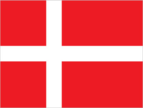
- <strong>description:</strong> red field with a white cross that extends to the edges of the flag; the vertical part of the cross is shifted to the left<br><br><strong>history: </strong>referred to as the Dannebrog (Danish flag) and is one of the oldest national flags in the world; the origin of the design is unclear; one legend says that the banner fell from the sky during an early-13th-century battle and inspired the royal army to victory; in actuality, the flag may derive from a crusade banner
- note
- <strong>note:</strong> Finland, Iceland, Norway, Sweden, and the Faroe Islands subsequently adopted the shifted-cross design
The flag of Denmark has a red field with a large white cross that extend to the edges of the field. The vertical part of this cross is offset towards the hoist side.
- svg
- https://flagcdn.com/dk.svg
parliamentary constitutional monarchy
ca. 965 (unified and Christianized under Harald I GORMSSON); 5 June 1849 (became a parliamentary constitutional monarchy)
accepts compulsory ICJ jurisdiction with reservations; accepts ICCt jurisdiction
ADB (nonregional member), AfDB (nonregional member), Arctic Council, Australia Group, BIS, CBSS, CD, CE, CERN, EAPC, EBRD, ECB, EIB, EITI (implementing country), ESA, EU, FAO, FATF, G-9, IADB, IAEA, IBRD, ICAO, ICC (national committees), ICCt, ICRM, IDA, IEA, IFAD, IFC, IFRCS, IGAD (partners), IHO, ILO, IMF, IMO, IMSO, Interpol, IOC, IOM, IPU, ISO, ITSO, ITU, ITUC (NGOs), MIGA, NATO, NC, NEA, NIB, NSG, OAS (observer), OECD, OPCW, OSCE, Paris Club, PCA, Schengen Convention, UN, UNCTAD, UNESCO, UNHCR, UNIDO, UNMIL, UNMISS, UNOOSA, UNRWA, UNTSO, UPU, Wassenaar Arrangement, WCO, WHO, WIPO, WMO, WTO, ZC
- Highest court(s)
- Supreme Court (consists of the court president and 18 judges)
- Judge selection and term of office
- judges appointed by the monarch upon the recommendation of the Minister of Justice, with the advice of the Judicial Appointments Council, a 6-member independent body of judges and lawyers; judges appointed for life with retirement at age 70
- Subordinate courts
- Special Court of Indictment and Revision; 2 High Courts; Maritime and Commercial Court; county courts
civil law; judicial review of legislative acts
- Chamber name
- The Danish Parliament (Folketinget)
- Electoral system
- proportional representation
- Expected date of next election
- October 2026
- Legislative structure
- unicameral
- Legislature name
- Parliament (Folketinget)
- Most recent election date
- 11/1/2022
- Number of seats
- 179 (all directly elected)
- Parties elected and seats per party
- Social Democratic Party (50); Liberal Party (Venstre) (23); Moderates (M) (16); Socialist People's Party (SF) (15); Danish Democrats (Æ) (14); Liberal Alliance (14); Conservative People's Party (10); Unity List-Red-Green Alliance (9); Other (24)
- Percentage of women in chamber
- 43.6%
- Scope of elections
- full renewal
- Term in office
- 4 years
Denmark’s King Frederick VI adopted the national coat of arms in 1819; the crown of King Christian V, who ruled Denmark and Norway from 1670 to 1699,<em> </em>sits atop the shield, symbolizing royal and national authority; the three lions represent a strong and powerful country, with red lily pads in the shape of hearts that stand for strength, valor, and joy
red, white
- Note
- <strong>note:</strong> includes three sites in Greenland
- Selected World Heritage Site locales
- Denmark: Mounds, Runic Stones, and Church at Jelling (c); Roskilde Cathedral (c); Kronborg Castle (c); Wadden Sea (n); Stevns Klint (n); Christiansfeld, Moravian Church Settlement (c); Par force hunting landscape, North Zealand (c); Greenland: Ilulissat Icefjord (n); Kujataa, Norse and Inuit Farming (c); Aasivissuit–Nipisat, Inuit Hunting Ground (c); Viking-Age Ring Fortresses (c); Møns Klint (n)
- Total World Heritage Sites
- 12 (8 cultural, 4 natural)
- Constitution Day, 5 June (1849)
- note
- <strong>note:</strong> closest equivalent to a national holiday
lion, mute swan
The Alternative or AP <br>Conservative People's Party or DKF or C <br>Danish People's Party or DF or O <br>Denmark Democrats or E <br>Green Left or SF or F (formerly Socialist People's Party or SF or F)<br>Liberal Alliance or LA or I <br>Liberal Party (Venstre) or V <br>Moderates or M <br>New Right Party or NB or D <br>Red-Green Alliance (Unity List) or EL <br>Social Democrats or SDP or A <br>Social Liberal Party or SLP or B
Monday
18 years of age; universal
Yes
Economy
- milk, wheat, potatoes, barley, sugar beets, pork, rapeseed, rye, oats, chicken (2023)
- note
- <b>note:</b> top ten agricultural products based on tonnage
- On alcohol and tobacco
- 3.5% of household expenditures (2023 est.)
- On food
- 11.9% of household expenditures (2023 est.)
- Expenditures
- $136.662 billion (2023 est.)
- Note
- <b>note:</b> central government revenues (excluding grants) and expenditures converted to US dollars at average official exchange rate for year indicated
- Revenues
- $149.393 billion (2023 est.)
- code
- DKK
- name
- Danish krone (DKK) [kr]
- $52.12 billion
- Current account balance 2022
- $46.488 billion (2022 est.)
- Current account balance 2023
- $40.061 billion (2023 est.)
- Current account balance 2024
- $55.901 billion (2024 est.)
- Note
- <b>note:</b> balance of payments - net trade and primary/secondary income in current dollars
<p>high-income, EU-member, trade-oriented Nordic economy; growth driven by pharmaceuticals, energy, and services; large share of employment in public sector; fixed exchange rate pegged to euro; strong fiscal position and declining public debt; tight labor market mitigated by migrant workers and higher retirement age</p>
- Currency
- Danish kroner (DKK) per US dollar -
- Exchange rates 2020
- 6.542 (2020 est.)
- Exchange rates 2021
- 6.287 (2021 est.)
- Exchange rates 2022
- 7.076 (2022 est.)
- Exchange rates 2023
- 6.89 (2023 est.)
- Exchange rates 2024
- 6.894 (2024 est.)
- $301.42 billion
- Exports 2022
- $283.37 billion (2022 est.)
- Exports 2023
- $276.646 billion (2023 est.)
- Exports 2024
- $299.405 billion (2024 est.)
- Note
- <b>note:</b> balance of payments - exports of goods and services in current dollars
- packaged medicine, fish, vaccines, refined petroleum, pork (2023)
- note
- <b>note:</b> top five export commodities based on value in dollars
- Germany 13%, USA 10%, Sweden 9%, Netherlands 7%, China 5% (2023)
- note
- <b>note:</b> top five export partners based on percentage share of exports
- net inflows
- $18.54 billion
- Exports of goods and services
- 68% (2023 est.)
- Government consumption
- 22.5% (2023 est.)
- Household consumption
- 45.5% (2023 est.)
- Imports of goods and services
- -59.8% (2023 est.)
- Investment in fixed capital
- 22.6% (2023 est.)
- Investment in inventories
- 0.2% (2023 est.)
- Note
- <b>note:</b> figures may not total 100% due to rounding or gaps in data collection
- Agriculture
- 0.7% (2024 est.)
- Industry
- 24% (2024 est.)
- Note
- <b>note:</b> figures may not total 100% due to non-allocated consumption not captured in sector-reported data
- Services
- 64% (2024 est.)
- $429.457 billion (2024 est.)
- note
- <b>note:</b> data in current dollars at official exchange rate
$71,026
- 28.2 (2018)
- Gini Index coefficient - distribution of family income 2022
- 29.3 (2022 est.)
- Note
- <b>note:</b> index (0-100) of income distribution; higher values represent greater inequality
$438.1 billion
$72,540
23 % of GDP
- Highest 10%
- 24.5% (2022 est.)
- Lowest 10%
- 3.6% (2022 est.)
- Note
- <b>note:</b> % share of income accruing to lowest and highest 10% of population
- $257.95 billion
- Imports 2022
- $245.07 billion (2022 est.)
- Imports 2023
- $243.478 billion (2023 est.)
- Imports 2024
- $252.954 billion (2024 est.)
- Note
- <b>note:</b> balance of payments - imports of goods and services in current dollars
- natural gas, cars, garments, packaged medicine, refined petroleum (2023)
- note
- <b>note:</b> top five import commodities based on value in dollars
- Germany 18%, Sweden 11%, Norway 10%, Netherlands 9%, China 7% (2023)
- note
- <b>note:</b> top five import partners based on percentage share of imports
- 12% (2024 est.)
- note
- <b>note:</b> annual % change in industrial value added based on constant local currency
wind turbines, pharmaceuticals, medical equipment, shipbuilding and refurbishment, iron, steel, nonferrous metals, chemicals, food processing, machinery and transportation equipment, textiles and clothing, electronics, construction, furniture and other wood products
- 1.37%
- Inflation rate (consumer prices) 2022
- 7.7% (2022 est.)
- Inflation rate (consumer prices) 2023
- 3.3% (2023 est.)
- Inflation rate (consumer prices) 2024
- 1.4% (2024 est.)
- Note
- <b>note:</b> annual % change based on consumer prices
- 3.21 million (2024 est.)
- note
- <b>note:</b> number of people ages 15 or older who are employed or seeking work
- total
- 3.29 million persons
- agriculture
- 1.62%
- industry
- 18.8%
- services
- 79.57%
- 12.4% (2021 est.)
- note
- <b>note:</b> % of population with income below national poverty line
- Note
- <strong>note:</strong> data cover general government debt and include debt instruments issued (or owned) by government entities other than the treasury; the data include treasury debt held by foreign entities; the data include debt issued by subnational entities, as well as intra-governmental debt; intragovernmental debt consists of treasury borrowings from surpluses in the social funds, such as for retirement, medical care, and unemployment; debt instruments for the social funds are not sold at public auctions
- Public debt 2017
- 35.3% of GDP (2017 est.)
- $489.39 billion
- Note
- <b>note:</b> data in 2021 dollars
- Real GDP (purchasing power parity) 2022
- $414.592 billion (2022 est.)
- Real GDP (purchasing power parity) 2023
- $424.937 billion (2023 est.)
- Real GDP (purchasing power parity) 2024
- $440.558 billion (2024 est.)
- 3.48%
- Note
- <b>note:</b> annual GDP % growth based on constant local currency
- Real GDP growth rate 2022
- 1.5% (2022 est.)
- Real GDP growth rate 2023
- 2.5% (2023 est.)
- Real GDP growth rate 2024
- 3.7% (2024 est.)
- $81,878
- Note
- <b>note:</b> data in 2021 dollars
- Real GDP per capita 2022
- $70,200 (2022 est.)
- Real GDP per capita 2023
- $71,500 (2023 est.)
- Real GDP per capita 2024
- $73,700 (2024 est.)
- $1.52 billion
- Note
- <b>note:</b> personal transfers and compensation between resident and non-resident individuals/households/entities
- Remittances 2022
- 0.3% of GDP (2022 est.)
- Remittances 2023
- 0.4% of GDP (2023 est.)
- Remittances 2024
- 0.4% of GDP (2024 est.)
- $108.41 billion
- Note
- <b>note:</b> holdings of gold (year-end prices)/foreign exchange/special drawing rights in current dollars
- Reserves of foreign exchange and gold 2022
- $96.073 billion (2022 est.)
- Reserves of foreign exchange and gold 2023
- $109.371 billion (2023 est.)
- Reserves of foreign exchange and gold 2024
- $108.405 billion (2024 est.)
37 % of GDP
32 % of GDP
- 31.4% (of GDP) (2023 est.)
- note
- <b>note:</b> central government tax revenue as a % of GDP
- 5.53%
- Note
- <b>note:</b> % of labor force seeking employment
- Unemployment rate 2022
- 4.5% (2022 est.)
- Unemployment rate 2023
- 5.1% (2023 est.)
- Unemployment rate 2024
- 5.6% (2024 est.)
- Female
- 11.9% (2024 est.)
- Male
- 12.3% (2024 est.)
- Note
- <b>note:</b> % of labor force ages 15-24 seeking employment
- Total
- 12.1% (2024 est.)
Energy
- Consumption
- 1.135 million metric tons (2023 est.)
- Exports
- 124,000 metric tons (2023 est.)
- Imports
- 1.296 million metric tons (2023 est.)
- Consumption
- 35.253 billion kWh (2023 est.)
- consumption per capita
- 5,878 kWh
- Exports
- 16.698 billion kWh (2023 est.)
- Imports
- 19.831 billion kWh (2023 est.)
- Installed generating capacity
- 20.794 million kW (2023 est.)
- Transmission/distribution losses
- 1.825 billion kWh (2023 est.)
- Electrification - total population
- 100% (2022 est.)
- Biomass and waste
- 21.2% of total installed capacity (2023 est.)
- Fossil fuels
- 11.3% of total installed capacity (2023 est.)
- hydroelectric
- 0.06%
- Hydroelectricity
- 0.1% of total installed capacity (2023 est.)
- nuclear
- 0%
- renewable
- 78.96%
- Solar
- 9.9% of total installed capacity (2023 est.)
- Wind
- 57.6% of total installed capacity (2023 est.)
- 2,483 kg of oil equivalent
- Total energy consumption per capita 2023
- 98.513 million Btu/person (2023 est.)
- Consumption
- 2.309 billion cubic meters (2023 est.)
- Exports
- 8.388 billion cubic meters (2023 est.)
- Imports
- 8.612 billion cubic meters (2023 est.)
- Production
- 2.021 billion cubic meters (2023 est.)
- Proven reserves
- 29.534 billion cubic meters (2021 est.)
- Crude oil estimated reserves
- 441 million barrels (2021 est.)
- Refined petroleum consumption
- 151,000 bbl/day (2024 est.)
- Total petroleum production
- 63,000 bbl/day (2023 est.)
39.5%
Communications
- per 100 inhabitants
- 44 per 100
- Subscriptions per 100 inhabitants
- 44 (2023 est.)
- Total
- 2.65 million (2023 est.)
strong public-sector TV presence, with Danmarks Radio (DR) operating 6 channels and TV2 operating roughly a half-dozen channels; private stations are available via satellite and cable feed; DR operates 4 FM radio stations, 10 digital audio stations, and 14 web-based radio stations; 140 commercial and 187 community (non-commercial) radio stations (2019)
.dk
- Percent of population
- 100% (2024 est.)
####
+45
- Subscriptions per 100 inhabitants
- 12 (2024 est.)
- Total subscriptions
- 698,000 (2024 est.)
- subscriptions per 100
- 127 per 100
- Subscriptions per 100 inhabitants
- 127 (2024 est.)
- Total subscriptions
- 7.57 million (2024 est.)
Transportation
102 (2025)
OY
Right
29 (2025)
- By type
- bulk carrier 15, container ship 132, general cargo 69, oil tanker 107, other 392
- Total
- 715 (2023)
- Key ports
- Abenra, Alborg, Arhus, Assens, Augustenborg, Bandholm, Esbjerg, Faborg, Fredericia, Frederikshavn, Haderslev, Holstebro-Stuer, Kalundborg, Kobenhavn, Kolding, Korsor, Marstal, Middelfart, Naestved, Nakskov, Nyborg, Nykobing, Odense, Randers, Ronne, Rudkobing, Sakskobing, Skagen Havn, Sonderborg, Stubbekobing, Studstrup, Svendborg, Vejle
- Large
- 1
- Medium
- 2
- Ports with oil terminals
- 33
- Small
- 30
- Total ports
- 69 (2024)
- Very small
- 36
- Total
- 2,682 km (2020) 876 km electrified
DK
Military and Security
- armored vehicles
- tanks
the Danish Armed Forces (Forsvaret) have a variety of missions, including enforcing the country’s sovereignty, monitoring Danish waters and airspace, search and rescue, environmental protection, host nation support for alliance partners, international peacekeeping, fulfilling Denmark’s commitments to NATO, and providing assistance to the police for border control, guard tasks, air surveillance, and during national disasters and other emergencies<br><br>NATO has been a cornerstone of Danish security and defense police since it joined in 1949 as one of the organization’s original members under the North Atlantic Treaty (also known as the Washington Treaty); the Forsvaret regularly exercises with NATO allies and participates in a number of NATO missions, including its Enhanced Forward Presence in Eastern Europe, air policing in the Baltics, naval operations in the Baltic Sea and North Atlantic, and an advisory mission in Iraq; the Forsvaret leads NATO’s Multinational Division – North (inaugurated 2019), a headquarters based in Latvia that supports the defense planning of Estonia, Latvia, and Lithuania, and the coordination of regional military activities, including NATO’s forward deployed forces; it also takes part in other international missions for Europe and the UN ranging from peacekeeping in Africa to protecting Europe's external borders by patrolling the Mediterranean Sea in support of the European Border and Coast Guard Agency; Denmark is a member of the EU and voted to join the EU’s Common Defense and Security Policy in a 2022 referendum; the Forsvaret cooperates closely with the militaries of other Nordic countries through the Nordic Defense Cooperation (NORDEFCO; established 2009), which consists of Denmark, Finland, Iceland, Norway, and Sweden in such areas as armaments, training and exercises, and operations; it also has a joint composite special operations command with Belgium and the Netherlands<br><br>the Forsvaret has an Arctic Command to protect the sovereignty of Denmark in the Arctic region, including the Faroe Islands and Greenland, and conducts maritime pollution prevention, environmental monitoring, fishery inspections, search and rescue, and hydrographical surveys, plus support to governmental science missions; there is also a joint service Special Operations Command (SOKOM), which includes the Sirius Dog Sled Patrol, an elite unit that patrols the most remote parts of northeast Greenland (2025)
- Danish Armed Forces (Forsvaret): Royal Danish Army, Royal Danish Navy, Royal Danish Air Force (2025)
- active duty personnel
- 15,000
- percent of total labor force
- 0.49 %
approximately 17,000 active-duty military personnel (2025)
Denmark contributes air, ground, and naval forces to a variety of international missions, including grounds troops to NATO's forward defenses in Latvia (2025)
the Danish military inventory is comprised of modern European, Israeli, US, and domestically produced weapons and equipment; the Danish defense industry is active in the production of naval vessels, defense electronics, and subcomponents of larger weapons systems, such as the US F-35 fighter aircraft; the major warships of the Royal Danish Navy are produced domestically (2025)
- 2 % of GDP
- current USD
- $9,958,899,779
- Military Expenditures 2021
- 1.3% of GDP (2021 est.)
- Military Expenditures 2022
- 1.4% of GDP (2022 est.)
- Military Expenditures 2023
- 2% of GDP (2023 est.)
- Military Expenditures 2024
- 2.3% of GDP (2024 est.)
- Military Expenditures 2025
- 3.2% of GDP (2025 est.)
- percent of central government expenditure
- 5.06 %
- percent of GDP
- 2.42 % of GDP
- 18 years of age for compulsory and voluntary military service for men and women; draftees serve 11 months, including five months of basic training, followed by six months in an operational unit (2025)
- note
- <strong>note 1: </strong>Denmark has had compulsory military service since 1849; conscripts are chosen by lottery; conscientious objectors can choose to instead serve 6 months in a non-military position, for example in Beredskabsstyrelsen (dealing with non-military disasters like fires, flood, pollution, etc.) or overseas foreign aid work<br><strong><br>note 2:</strong> women have been able serve in all military occupations, including combat arms, since 1988; military conscription was extended to women in June 2025
- PowerIndex score
- 0.8198
Transnational Issues
- Refugees
- 100,832 (2024 est.)
- Stateless persons
- 8,566 (2024 est.)
Terrorism
- Islamic State of Iraq and ash-Sham (ISIS); Islamic Revolutionary Guard Corps (IRGC)/Qods Force
- note
- <strong>note:</strong> details about the history, aims, leadership, organization, areas of operation, tactics, targets, weapons, size, and sources of support of the group(s) appear(s) in the Terrorism reference guide
Environment
- From coal and metallurgical coke
- 2.54 million metric tonnes of CO2 (2023 est.)
- From consumed natural gas
- 4.841 million metric tonnes of CO2 (2023 est.)
- From petroleum and other liquids
- 22.535 million metric tonnes of CO2 (2023 est.)
- Total emissions
- 29.915 million metric tonnes of CO2 (2023 est.)
air pollution, principally from vehicle and power-plant emissions; nitrogen and phosphorus pollution of the North Sea; water pollution from animal wastes and pesticides
- Global geoparks and regional networks
- Odsherred; South Fyn Archipelago; Vestjylland (2024)
- Total global geoparks and regional networks
- 3 (2024)
- Party to
- Air Pollution, Air Pollution-Heavy Metals, Air Pollution-Multi-effect Protocol, Air Pollution-Nitrogen Oxides, Air Pollution-Persistent Organic Pollutants, Air Pollution-Sulphur 85, Air Pollution-Sulphur 94, Air Pollution-Volatile Organic Compounds, Antarctic Treaty, Biodiversity, Climate Change, Climate Change-Kyoto Protocol, Climate Change-Paris Agreement, Comprehensive Nuclear Test Ban, Desertification, Endangered Species, Environmental Modification, Hazardous Wastes, Law of the Sea, Marine Dumping-London Convention, Marine Dumping-London Protocol, Marine Life Conservation, Nuclear Test Ban, Ozone Layer Protection, Ship Pollution, Tropical Timber 2006, Wetlands, Whaling
- Signed, but not ratified
- Antarctic-Environmental Protection
- Agriculture
- 236.5 kt (2019-2021 est.)
- Energy
- 49.7 kt (2022-2024 est.)
- Other
- 5.3 kt (2019-2021 est.)
- Waste
- 54.4 kt (2019-2021 est.)
10.1 micrograms per cubic meter (2019 est.)
18 % of total land area
79 % of total
6 billion cubic meters (2022 est.)
- 16 % of internal resources
- Agricultural
- 506.487 million cubic meters (2022)
- Industrial
- 45.076 million cubic meters (2022)
- Municipal
- 382.787 million cubic meters (2022)
- Municipal solid waste generated annually
- 4.911 million tons (2024 est.)
- Percent of municipal solid waste recycled
- 35.4% (2022 est.)