Compare Countries
Select up to 4 countries for side-by-side comparison
Introduction
| Field |
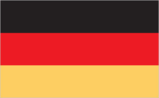 Germany
 |
 France
 |
|---|---|---|
| Background | As Europe's largest economy and second most-populous nation (after Russia), Germany is a key member of the continent's economic, political, and defense organizations. European power struggles immersed Germany in two devastating world wars in the first half of the 20th century and left the country oc... | France today is one of the most modern countries in the world and is a leader among European nations. It plays an influential global role as a permanent member of the United Nations Security Council, NATO, the G-7, the G-20, the EU, and other multilateral organizations. France rejoined NATO's integr... |
Geography
| Field |
Germany |
France |
|---|---|---|
| Location | Central Europe, bordering the Baltic Sea and the North Sea, between the Netherlands and Poland, south of Denmark | <strong>metropolitan France:</strong> Western Europe, bordering the Bay of Biscay and English Channel, between Belgium and Spain, southeast of the UK; bordering the Mediterranean Sea, between Italy and Spain<br><br><strong>French Guiana:</strong> Northern South America, bordering the North Atlantic ... |
| Area | 357,022 sq km | 643,801 sq km ; 551,500 sq km (metropolitan France) |
| Climate | temperate and marine; cool, cloudy, wet winters and summers; occasional warm mountain (foehn) wind | <strong>metropolitan France:</strong> generally cool winters and mild summers, but mild winters and hot summers along the Mediterranean; occasional strong, cold, dry, north-to-northwesterly wind known as the mistral<br> |
| Terrain | lowlands in north, uplands in center, Bavarian Alps in south | <strong>metropolitan France:</strong> mostly flat plains or gently rolling hills in north and west; remainder is mountainous, especially Pyrenees in south, Alps in east<br><br><strong>French Guiana:</strong> low-lying coastal plains rising to hills and small mountains<br><br><strong>Guadeloupe:</str... |
| Natural resources | coal, lignite, natural gas, iron ore, copper, nickel, uranium, potash, salt, construction materials, timber, arable land | <em>metropolitan France:</em> coal, iron ore, bauxite, zinc, uranium, antimony, arsenic, potash, feldspar, fluorspar, gypsum, timber, arable land, fish; <em>French Guiana</em><em>:</em> gold deposits, petroleum, kaolin, niobium, tantalum, clay |
| Elevation | Zugspitze 2,963 m | Mont Blanc 4,810 |
People and Society
| Field |
Germany |
France |
|---|---|---|
| Population | 84,012,284 (2025 est.) | 68,512,806 (2025 est.) |
| Languages | 1 | 1 |
| Religions | Roman Catholic 24.8%, Protestant 22.6%, Muslim 3.7%, other 5.1%, none 43.8% (2022 est.) | Roman Catholic 47%, Muslim 4%, Protestant 2%, Buddhist 2%, Orthodox 1%, Jewish 1%, other 1%, none 33%, unspecified 9% (2021 est.) |
| Age structure | 13.8% (male 5,925,800/female 5,688,603) | 17.3% (male 6,060,087/female 5,792,805) |
| Median age | 46.9 years (2025 est.) | 42.7 years (2025 est.) |
| Population growth rate | -0.13% (2025 est.) | 0.2% (2025 est.) |
| Birth rate | 8.87 births/1,000 population (2025 est.) | 10.88 births/1,000 population (2025 est.) |
| Death rate | 11.96 deaths/1,000 population (2025 est.) | 9.91 deaths/1,000 population (2025 est.) |
| Life expectancy at birth | 81.9 years (2024 est.) | 82.6 years (2024 est.) |
| Literacy | — | — |
Government
| Field |
Germany |
France |
|---|---|---|
| Government type | federal parliamentary republic | semi-presidential republic |
| Capital | Berlin | Paris |
| Independence | 18 January 1871 (establishment of the German Empire); divided into four zones of occupation (UK, US, USSR, and France) in 1945 after World War II; Federal Republic of Germany (FRG or West Germany) proclaimed on 23 May 1949 and included the former UK, US, and French zones; German Democratic Republic ... | no official date of independence: 486 (Frankish tribes unified under Merovingian kingship); 10 August 843 (Western Francia established from the division of the Carolingian Empire); 14 July 1789 (French monarchy overthrown); 22 September 1792 (First French Republic established); 4 October 1958 (Fifth... |
| Constitution | previous 1919 (Weimar Constitution); latest drafted 10-23 August 1948, approved 12 May 1949, promulgated 23 May 1949, entered into force 24 May 1949 | many previous; latest effective 4 October 1958 |
| Legal system | civil law system | civil law; review of administrative but not legislative acts |
Economy
| Field |
Germany |
France |
|---|---|---|
| GDP (purchasing power parity) | — | — |
| GDP - per capita (PPP) | — | — |
| GDP - real growth rate | — | — |
| Inflation rate (consumer prices) | 2.26% | 2% |
| Unemployment rate | 3.71% | 7.54% |
| Industries | <p>iron, steel, coal, cement, chemicals, machinery, vehicles, machine tools, electronics, automobiles, food and beverages, shipbuilding, textiles</p> | machinery, chemicals, automobiles, metallurgy, aircraft, electronics, textiles, food processing, tourism |
| Agriculture - products | — | — |
| Exports | $1.94 trillion | $1.07 trillion |
| Imports | $1.76 trillion | $1.08 trillion |
| Public debt | 63.9% of GDP (2017 est.) | 98.5% of GDP (2023 est.) |
Communications
| Field |
Germany |
France |
|---|---|---|
| Telephones - mobile cellular | 125 per 100 | 77.5 million (2023 est.) |
| Internet users | 94% (2024 est.) | 87% (2023 est.) |
Military and Security
| Field |
Germany |
France |
|---|---|---|
| Military expenditures | 2 % of GDP | 2 % of GDP |
| Military and security forces | Federal Armed Forces (Bundeswehr): German Army (Deutsche Heer), German Navy (Deutsche Marine, includes naval air arm), German Air Force (Deutsche Luftwaffe, includes air defense), Cyber and Information Space (Cyber und Informationsraum) (2025) | French Armed Forces (Forces Armées Françaises): Army (l'Armee de Terre; includes Foreign Legion), Navy (Marine Nationale), Air and Space Force (l'Armee de l’Air et de l’Espace); includes Air Defense), National Guard (Garde Nationale), National Gendarmerie (Gendarmerie Nationale) (2025) |
Transportation
| Field |
Germany |
France |
|---|---|---|
| Airports | 840 (2025) | 1,218 (2025) |
| Railways | 39,379 km (2020) 20,942 km electrified | 27,860 km (2020) 16,660 km electrified |
| Roadways | — | — |